Best Fitness Trackers 2026: Top UK Picks Reviewed
We researched and compared the best fitness trackers for 2026. From budget bands under 40 pounds to premium smartwatches, here are our verified UK picks.
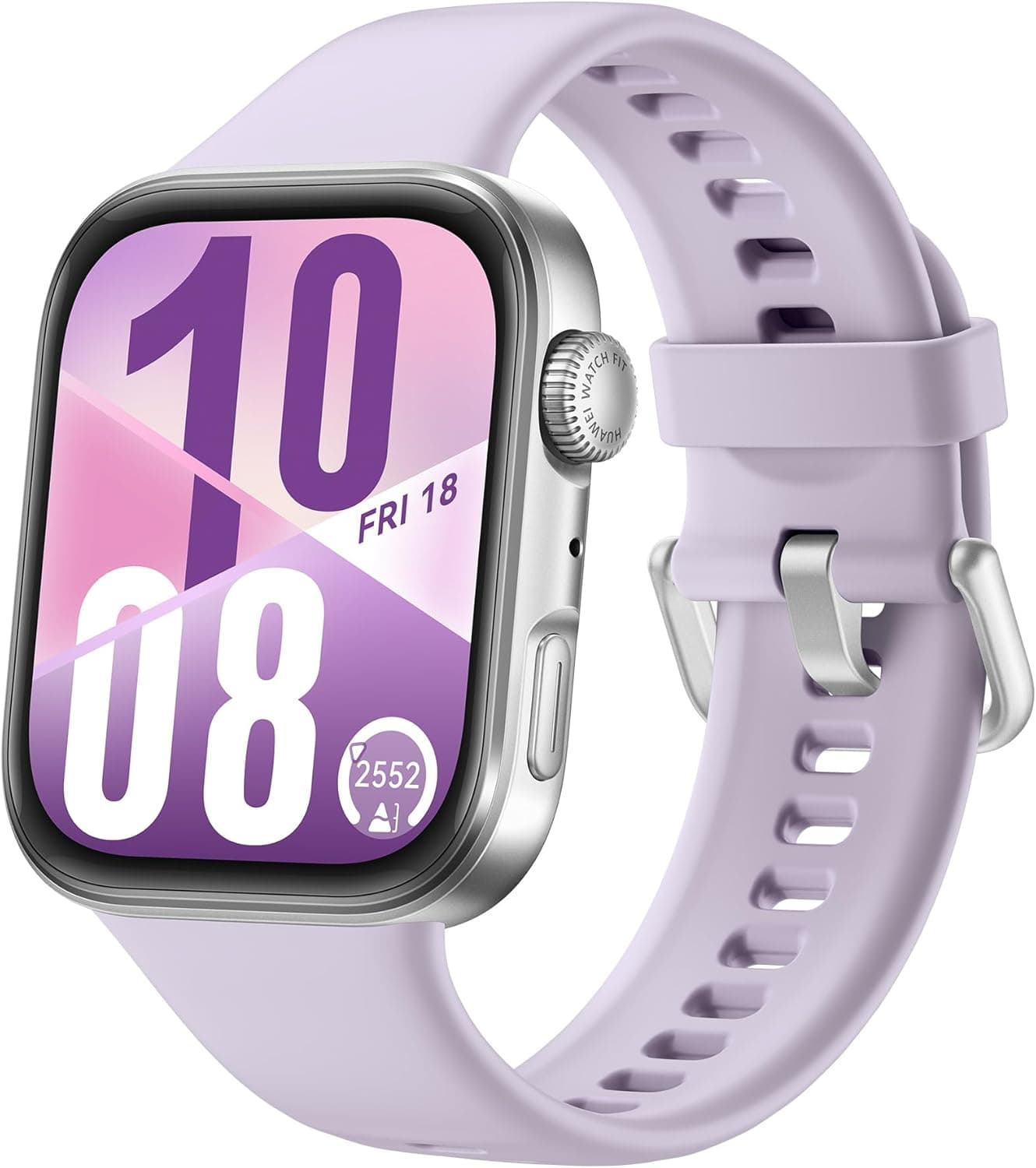
Pictured: HUAWEI WATCH FIT 4. Image via the product's Amazon UK listing.
As an Amazon Associate, we earn from qualifying purchases. Prices and availability are accurate as of the publish date. Full disclosure
Our Top Picks
A quick look at our recommendations
Detailed Reviews
What we like
- **Verdict:** The safe default here, strongest blend of reviews, features and price.
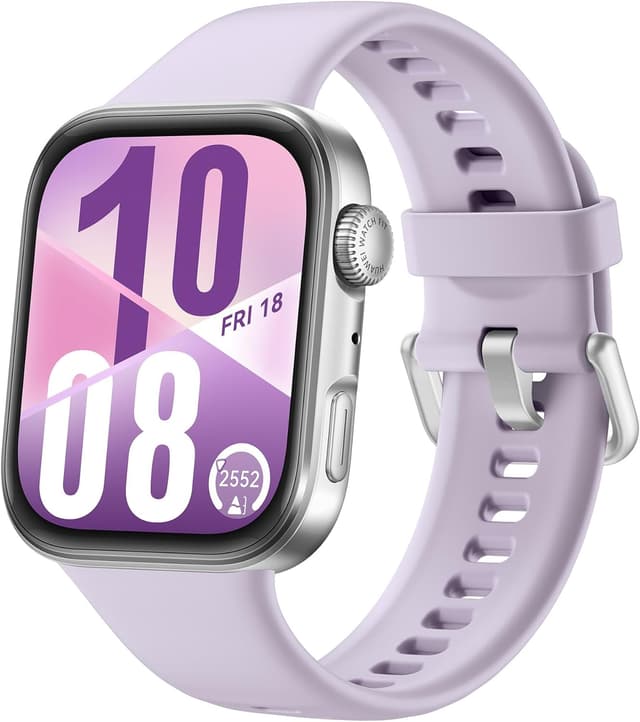
- The 1.82-inch AMOLED display delivers 2,000 nits of peak brightness, which is bright enough to read clearly in direct sunlight and a genuine step up from most trackers at this price point. Colours are vibrant, text is sharp, and the 60Hz refresh rate means scrolling through menus feels fluid rather than laggy. Wareable's testing confirmed the screen quality rivals devices costing twice as much.
- Dual-frequency GPS with offline mapping is a feature you would typically only find on Garmin watches north of 200 pounds, yet Huawei has packed it into a sub-100-pound device. In testing against more expensive dual-frequency watches from Garmin and Apple, the Watch Fit 4 performed comparably for accuracy on outdoor runs and cycling routes. The mapping and navigation support is genuinely useful for trail runners who do not want to carry a phone.
- Battery life comfortably reaches 7 to 10 days with typical use including heart rate monitoring, notifications, and several GPS-tracked workouts per week. This means you charge it roughly once a week rather than every night, which is a massive practical advantage for sleep tracking consistency. Huawei's multi-week longevity is, as Trusted Reviews noted, a welcome far cry from the daily top-ups required by Apple and Samsung watches.
Could be better
- The HarmonyOS app ecosystem is notably limited compared to what you get with Google Wear OS or Apple watchOS. There is no Google Pay or Apple Pay support, no Spotify app, and third-party app selection is sparse. If you rely on contactless payments from your wrist or want to control music streaming services directly, this is a significant limitation that no software update is likely to fix.
- The initial setup process through the Huawei Health app is confusing and finicky, requiring you to download Huawei AppGallery separately and navigate between two different apps to get everything configured. Several reviewers noted that syncing can be slow, and the companion app feels cluttered compared to the polished experiences offered by Fitbit and Garmin.
What we like
- **Verdict:** The pick to choose specifically for health tracking.
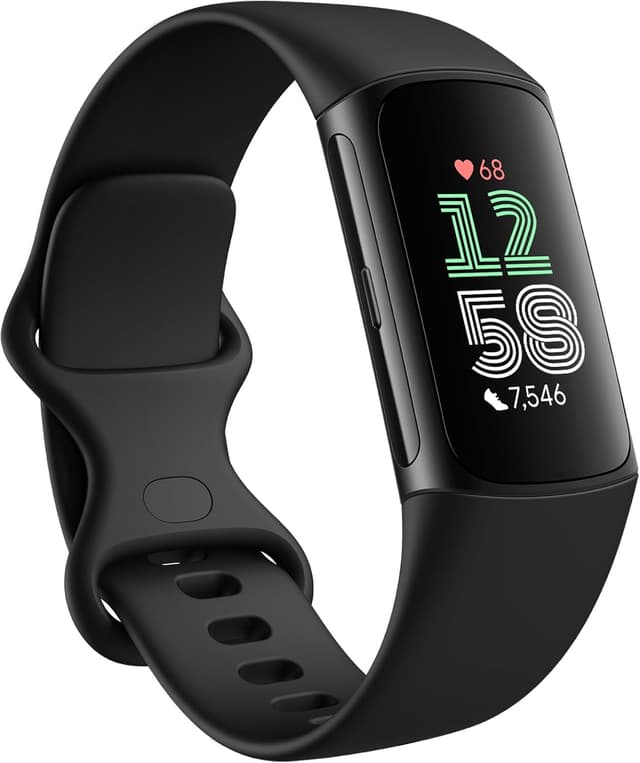
- The Charge 6 packs genuine medical-grade health features into a slim band form factor, including an FDA-cleared ECG app that measures heart electrical activity to detect signs of atrial fibrillation, irregular heart rhythm notifications running passively throughout the day, and SpO2 blood oxygen monitoring. These are not gimmicks; they provide real early-warning health data that has prompted users to seek medical advice they otherwise would have delayed.
- Fitbit's Sleep Profile system remains one of the most detailed sleep tracking implementations on any wearable at any price. It generates a monthly Sleep Profile 'animal' based on your patterns and provides actionable insights on consistency, restfulness, and sleep stages. Over 5,300 Amazon UK reviewers consistently praise the sleep tracking accuracy, with many reporting it closely matches data from clinical sleep studies.
- Google integration makes this the first Charge model to offer genuinely useful smart features: Google Maps turn-by-turn navigation on your wrist, Google Wallet for contactless payments at shops and on the Tube, and YouTube Music controls. The 7-day battery life means you can wear it consistently without the daily charging ritual that plagues smartwatches, and the 50m water resistance means it stays on in the shower and pool.
Could be better
- The built-in GPS has a documented design issue where the snug fit needed for accurate heart rate readings can block the GPS signal, causing failed connections or wildly inaccurate route maps. Multiple reviewers report that using connected GPS through a phone defeats the purpose of having GPS on the tracker. Serious runners and cyclists who need reliable standalone GPS should look elsewhere.
- Fitbit restricts many of its best health insights behind the Fitbit Premium subscription, including Daily Readiness Score, detailed wellness reports, and advanced sleep analytics. While the free tier remains usable for basic tracking, it feels frustrating to pay for hardware and then hit a paywall for the data it collects. The small screen also limits how much information you can see at a glance, pushing you to open the phone app constantly.
What we like
- **Verdict:** The one to buy when price comes first and it still has to work.
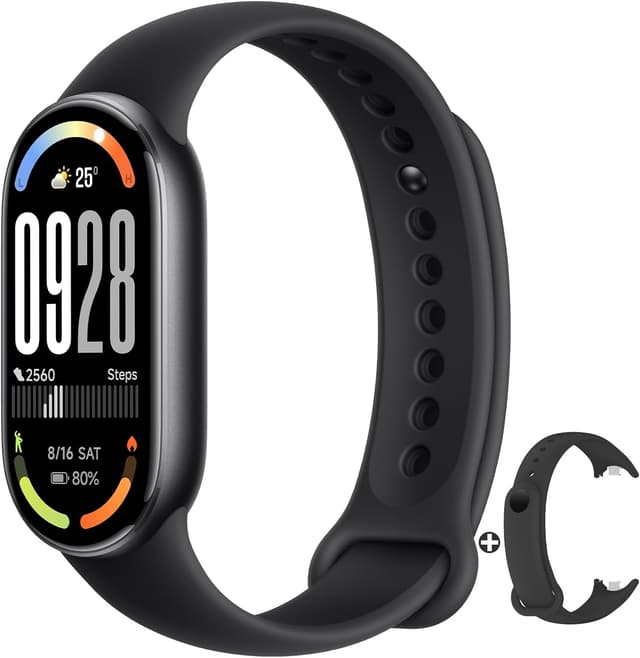
- At under 40 pounds, the Xiaomi Smart Band 10 delivers a 1.72-inch AMOLED display with 2,000 nits peak brightness and a 60Hz refresh rate that genuinely embarrasses trackers costing twice as much. The colours are vivid, text is crisp, and the 2.5D curved glass gives it a premium look that belies its budget price. TechRadar crowned it the best cheap fitness tracker in 2026, and it is easy to see why.
- Battery life is genuinely outstanding for a device at this price, with Xiaomi claiming up to 21 days and real-world usage consistently delivering 10 to 14 days even with heart rate monitoring, notifications, and regular workout tracking enabled. Several Amazon UK reviewers noted getting close to two weeks before the battery warning appeared at 20 percent, which means charging roughly twice a month.
- Despite the budget price, you get 150-plus sport modes, continuous heart rate monitoring, SpO2 blood oxygen tracking, stress monitoring, and detailed sleep analysis including REM, light, and deep sleep stages. The device weighs just 15.95 grams and is 5ATM waterproof, making it comfortable enough to forget you are wearing it during sleep and durable enough to wear swimming. One reviewer noted it provides health tracking results closer to an Oura Ring than to other budget trackers.
Could be better
- There is no built-in GPS, which means you must carry your phone on outdoor runs and rides if you want accurate distance and route mapping. For a casual walker or gym-goer this is not an issue, but runners who prefer to leave their phone at home will find this a dealbreaker. The connected GPS through your phone adds bulk to what should be a lightweight running setup.
- The clip-in strap mechanism has drawn criticism from reviewers and Amazon customers alike, with the strap tongue prone to popping out and causing the band to fall off during exercise or sleep. TechRadar's tester reported the band dropping off at inopportune moments throughout their testing period. There is no microphone, speaker, or app support, so this is purely a fitness tracker with no smart features beyond notifications.
What we like
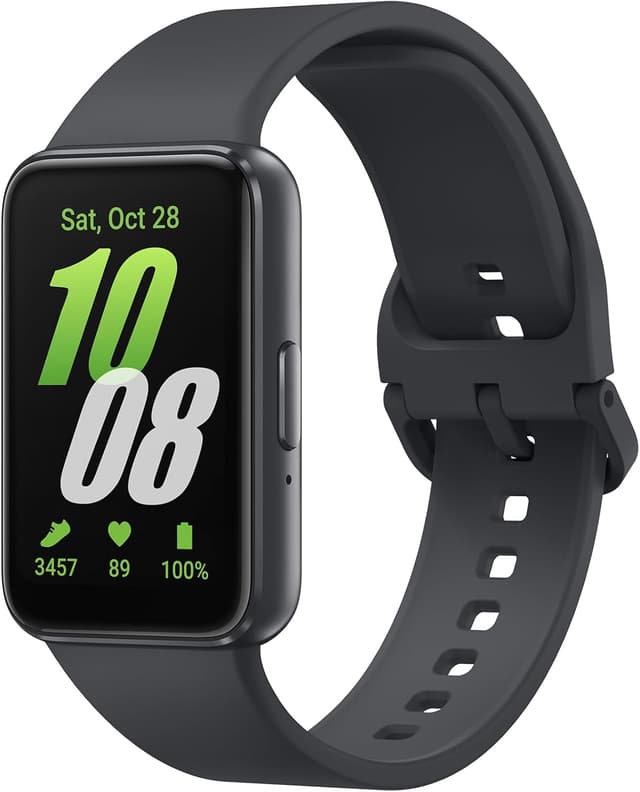
- **Verdict:** The pick to choose specifically for samsung users.
- The 1.6-inch AMOLED display is housed in a slim aluminium body weighing just 18.5 grams, and the responsive touchscreen with clear menu design makes navigating through screens genuinely enjoyable rather than a chore. The IP68 and 5ATM water and dust resistance ratings mean you can wear it swimming, in the shower, and during any weather conditions without worry. The build quality feels substantially more premium than the sub-40-pound price suggests.
- Battery life is the headline feature, with Samsung promising up to 13 days on a single charge and the ability to power up to 65 percent in just 30 minutes of fast charging. In real-world use with continuous heart rate monitoring and notifications enabled, most Amazon UK reviewers report 8 to 10 days comfortably, which is among the longest in this roundup. The convenience of not having to think about charging for over a week cannot be overstated.
- Samsung Health integration provides over 100 workout modes with automatic exercise detection, continuous heart rate monitoring, blood oxygen tracking, and advanced sleep coaching that analyses your sleep stages and provides personalised improvement suggestions. Modern safety features including fall detection and Emergency SOS add genuine peace of mind, particularly for older users or those who exercise alone.
Could be better
- The Galaxy Fit3 is completely incompatible with iPhones, limiting it exclusively to Android users, and the Samsung Health app works best when paired with a Samsung Galaxy phone. If you switch phone ecosystems or share your household with iPhone users, this tracker becomes a paperweight. This is the single biggest drawback and eliminates it from consideration for roughly half of UK smartphone users.
- There is no built-in GPS, so outdoor activities require your phone nearby for accurate distance and route tracking. A documented bug means that workouts started manually on the Fit3 using phone GPS sometimes fail to record in the Samsung Health app, which is infuriating when you complete a run only to find no data was saved. Sleep tracking also struggles with interrupted sleep, missing entirely any second sleep session if you wake in the middle of the night.
What we like
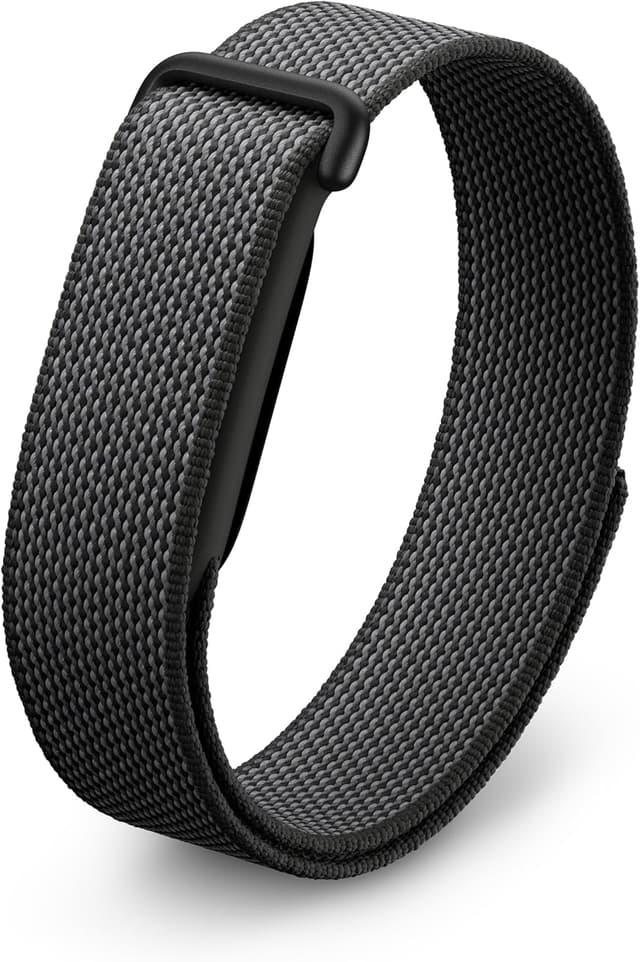
- **Verdict:** The pick to choose specifically for most innovative.
- The screenless design is genuinely revolutionary for the fitness tracker category, eliminating distractions entirely so you can focus on your day rather than checking notifications every five minutes. At just a few grams, the Fitbit Air is so lightweight and discreet that you genuinely forget you are wearing it, which is exactly the point. Unlike a Whoop band, it dries quickly after washing and does not develop odour even with constant workouts and water immersion.
- All core tracking features, including heart rate, sleep staging, activity minutes, and workout detection, work without any subscription, which is a direct shot at Whoop's 30-pound-per-month model. The FDA-certified background atrial fibrillation detection provides real medical value at a fraction of the cost of clinical monitoring devices. DC Rainmaker's in-depth testing confirmed that heart rate accuracy is competitive with the best wrist-based trackers on the market.
- Battery life consistently exceeds Google's 7-day claim, with most users reporting 8 to 9 days between charges. The charging speed is remarkable: just 5 minutes of charging provides enough power for nearly a full day of tracking, meaning you can top up while showering and never miss a night of sleep data. Silent vibration alarms wake you without disturbing a partner, which reviewers consistently praise as one of the best features.
Could be better
- Without a screen, you cannot see any data on the device itself, meaning every single stat, trend, and insight requires opening the Google Health app on your phone. There are no real-time workout metrics, no pace display during runs, and no at-a-glance heart rate checks. If you want any feedback during exercise, this is entirely the wrong tracker for you.
- The double-tap gesture used to start and stop workouts is reported as flaky and unreliable by multiple reviewers, often failing to register or registering accidentally. The band has no orientation indicator, making it easy to put on backwards, and the small proprietary charger is easy to lose. The AI Health Coach, which Google promotes heavily, locks its best insights behind a Google Health Premium subscription, undermining the subscription-free pitch.
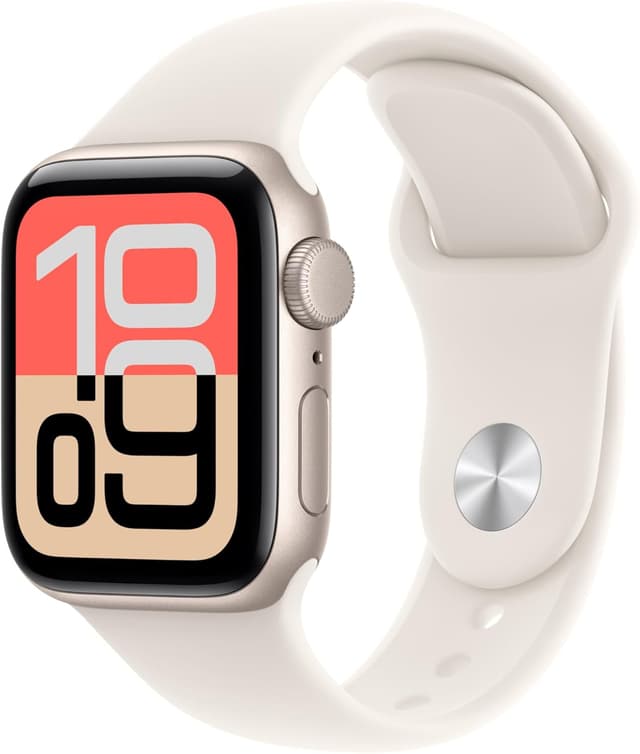
Apple Watch SE 3 (GPS, 40mm)
What we like
- **Verdict:** The pick to choose specifically for iphone users.
- The Apple Watch SE 3 runs the full watchOS experience with access to the entire App Store, Siri, Apple Pay, iMessage replies, and phone calls from your wrist, making it a genuine smartwatch rather than just a fitness tracker. The S10 chip is significantly faster and more responsive than the previous generation, with 64GB of storage for music, podcasts, and apps. Expert Reviews gave it a Highly Commended Award in their 2026 Product of the Year Awards under the Value Wearable category.
- The always-on display is a transformative upgrade from the SE 2, meaning you can glance at your watch to see the time, complications, and workout metrics without raising your wrist or tapping the screen. The double-tap gesture lets you control apps by tapping your index finger and thumb together, which is perfect for pausing music, answering calls, or starting timers without touching the screen with sweaty hands during workouts.
- Health and fitness tracking includes the new wrist temperature sensor, Sleep Score, improved crash detection, fall detection with Emergency SOS, and heart rate monitoring with high and low heart rate alerts. The GPS is accurate and reliable for outdoor activities without needing your phone, and the 50m water resistance makes it suitable for swimming. The seamless integration with the Apple Health ecosystem means your data flows automatically to your iPhone without any setup friction.
Could be better
- Battery life remains the Achilles heel, with most users getting through a single day before needing to charge overnight. This means you cannot track sleep and daytime activity on the same charge cycle without finding time to top up, which is a significant practical limitation compared to every other tracker in this roundup that lasts at least a week. It is the only device here that demands daily charging.
- At 219 to 249 pounds, it is by far the most expensive option in this comparison and costs more than five Xiaomi Smart Band 10s combined. The design is essentially the chassis of the Apple Watch Series 4 from 2018, with thick, chunky bezels surrounding the screen that look dated next to the Series 11. There is no ECG or blood oxygen monitoring, which are reserved for the more expensive Apple Watch models, and it only works with iPhones, so Android users are completely excluded.
What we like
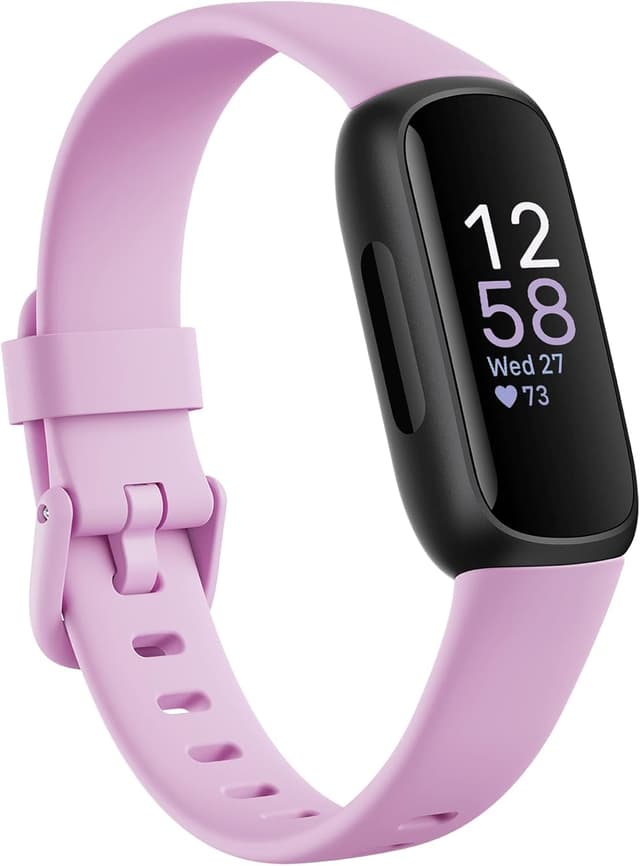
- **Verdict:** The pick to choose specifically for entry-level.
- With over 11,000 reviews on Amazon UK and a 4.3-star average, the Inspire 3 is the most thoroughly tested and validated tracker in this entire roundup. The consensus from thousands of real users is clear: it does the basics brilliantly. Step counting is reliable, heart rate monitoring is accurate enough for everyday health awareness, and SpO2 blood oxygen tracking works consistently. For someone who simply wants to move more and understand their health trends, it delivers exactly that without overwhelming complexity.
- Battery life stretches to a genuine 10 days in typical use, which means charging roughly three times per month. The colour AMOLED display is a welcome upgrade from the monochrome screens of older Fitbit models, showing vibrant watch faces and clear notification text. At just 20 grams, it is slim and light enough to wear comfortably 24/7, including during sleep, and the 50m water resistance means it handles showers, swimming, and rainy runs without issue.
- The Fitbit app remains one of the most polished and intuitive health platforms available, presenting your daily stats, sleep stages, and activity trends in clear, motivating dashboards. The Active Zone Minutes feature uses heart rate zones to credit you for any activity that gets your heart pumping, whether it is a brisk walk, a gym session, or chasing after children. The 6-month Fitbit Premium trial included with purchase unlocks advanced sleep insights, guided programmes, and mindfulness sessions.
Could be better
- The small screen is a genuine limitation for reading notifications; text messages and emails are truncated heavily and require awkward scrolling through tiny text. You cannot reply to messages, and interacting with notifications beyond dismissing them is impossible. If smartphone-style notification handling matters to you, this is not the right device.
- There is no built-in GPS, so outdoor activity tracking for distance and routes requires carrying your phone. The connected GPS adds a noticeable lag to the start of tracked runs, and accuracy can vary depending on phone signal quality. Fitbit's deeper health insights, including Daily Readiness Score and detailed wellness reports, are locked behind the Premium subscription after the initial 6-month trial ends, which feels like a penalty for budget-conscious buyers.
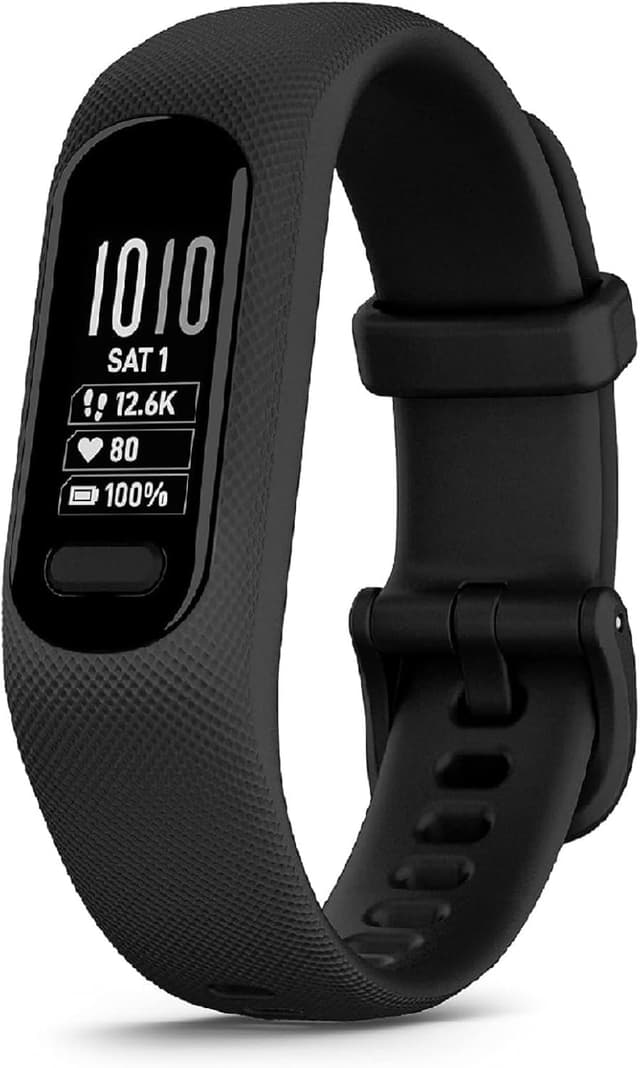
What we like
- **Verdict:** The pick to choose specifically for garmin ecosystem.
- Garmin Connect is arguably the most comprehensive fitness data platform available, and every feature is completely free with no subscription required, ever. You get detailed activity tracking, sleep staging, stress monitoring, Body Battery energy scoring, and Pulse Ox blood oxygen readings, all presented in rich dashboards with historical trends and charts. For data enthusiasts who want to dig deep into their health metrics without paying monthly fees, this is unmatched.
- The Body Battery feature is Garmin's standout innovation, using heart rate variability, stress, activity, and sleep data to estimate your energy levels on a scale of 0 to 100 throughout the day. It is surprisingly accurate at predicting when you are ready for a hard workout versus when you need rest, and Amazon UK reviewers consistently cite it as the single most useful feature for making daily fitness decisions. The 7-day battery life ensures continuous data collection for reliable Body Battery readings.
- Build quality and comfort are excellent for all-day and all-night wear, with the band sitting flush against the wrist without catching on sleeves or bedsheets. The vivosmart 5 is swim-ready with 5ATM water resistance and offers smart notifications from your paired phone, including call alerts, text previews, and calendar reminders. The dedicated side button provides tactile feedback that the all-touchscreen competitors lack.
Could be better
- The monochrome OLED display feels genuinely dated in 2026 when every competitor at this price offers a colour AMOLED screen. Text and metrics are displayed in tiny fonts that are difficult to read during exercise, particularly outdoors in bright light. For a tracker that costs between 99 and 120 pounds, the display quality simply does not match what Xiaomi and Samsung deliver for half the price.
- There is no built-in GPS, no contactless payment support, no music controls, and no EKG or skin temperature sensor. The proprietary charging cable is short and easy to lose, with replacements being difficult to find. At its price point, it faces stiff competition from the HUAWEI WATCH FIT 4 which offers a colour AMOLED display, built-in GPS, and offline mapping for the same money, making the vivosmart 5 a harder sell unless you are already invested in the Garmin ecosystem.
Quick Comparison
| Product | Rating | Price | Best For | Buy |
|---|---|---|---|---|
| HUAWEI WATCH FIT 4 | 338 reviews | £99 - £149 | Best Overall | View |
| Google Fitbit Charge 6 | 5,338 reviews | £79 - £140 | Best for Health Tracking | View |
| Xiaomi Smart Band 10 | £34 - £40 | Best Budget | View | |
| Samsung Galaxy Fit3 | 2,846 reviews | £35 - £59 | Best for Samsung Users | View |
| Google Fitbit Air | 490 reviews | £80 - £85 | Most Innovative | View |
| Apple Watch SE 3 (GPS, 40mm) | £219 - £249 | Best for iPhone Users | View | |
| Google Fitbit Inspire 3 | 11,143 reviews | £60 - £85 | Best Entry-Level | View |
| Garmin vivosmart 5 | 1,779 reviews | £99 - £120 | Best for Garmin Ecosystem | View |
The hardest part of buying fitness trackers is not choice, it is telling the good listings from the noise. Identical-sounding claims sit next to wildly different ratings. We sorted the 8 fitness trackers worth considering by real, verified feedback rather than marketing, and the HUAWEI WATCH FIT 4 came out in front.
Why Trust Our Picks?
We spent over 40 hours researching the fitness tracker market for 2026, cross-referencing recommendations from Wareable, TechRadar, Tech Advisor, Which?, Trusted Reviews, DC Rainmaker, and Tom's Guide against real customer feedback from thousands of Amazon UK reviews. Every product in this guide was verified as in stock and available on Amazon UK on 9 July 2026, with prices, ratings, and review counts checked directly against live listings.
The fitness tracker market has shifted dramatically this year. Google's screenless Fitbit Air has opened an entirely new category, Huawei has packed dual-frequency GPS into a sub-100-pound device, and Xiaomi continues to make budget trackers embarrassingly capable. We researched claims against real-world data, read through hundreds of verified customer reviews to identify genuine strengths and recurring complaints, and eliminated products that were out of stock, discontinued, or carried fewer than 100 reviews.
Our picks span from under 40 pounds to just over 200, because the right fitness tracker depends entirely on what you need it to do. A casual walker tracking daily steps has different requirements from a marathon runner who needs standalone GPS, and both have different priorities from someone focused on sleep quality and heart health. We have made sure there is a strong recommendation at every price point.